The author in his paper examines in detail the individual steps that make up the course selection process for energy services provider. Special focus is on the evaluation of the bids submitted in the tender.
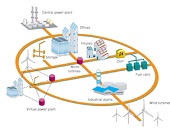
Projects of the International Energy Agency show that use energy more efficiently has a greater potential to reduce CO2 over the next 20 years than all other options combined. The main objectives of intelligent networks are improving the efficiency, reliability, safety and environmental sustainability.
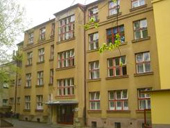
The Professional medical institute in Žamberk is one of the objects in the region of Pardubice in the Czech republic, where the energy performance contracting method was applicated. By implementing energy-saving project the central steam boiler was closed and a new gas boiler (power 1690 kW) was built in the building of the existing heat exchangers.

The article provides information on the activities of the International Centre AIVC (Air Infiltration and Ventilation Centre), which in a new cycle from 2011 to 2013 will focus on the strategy 20-20-20, which oblige EU countries to save energy in buildings. The article explains the structure of the AIVC and its tasks as an international information center, to help not only the AIVC member countries in addressing ventilation in newly built buildings that will have to meet very strict requirements for tightness.

This paper describes the brief analysis of the quality of heat pumps offered in the Czech Republic. It specifies the importance of improving offer based on the evaluation of heat pumps according to the methodology of the European Heat Pumps Association (EHPA).This also includes the basic conditions for awarding the quality of the European Quality Label for Heat Pumps.

The evaluation of the heating period for the calendar year 2010 is useful for producers and consumers, who work on a January-December regime. It also provides data to energy experts for assessing the operational energy consumption of buildings. It also provides figures for the controlling of boilers, according the Decree 276/2007 Coll.

Based on the observations made at the Prague-Karlov station, the 2009/2010 heating season was a little shorter, 217 days, and the average temperature was 4.3ºC, slightly cooler than the long-term average. The basic characteristic necessary for heating is 3187 dº (19) degree days, so the needs for heating were slightly lower than the long term average.

Author raises discussion and proposed changes in the rules of the energy audit. Draws attention to the criteria for evaluating alternatives and to small requirements for variability solutions. Read controversy of the author and reviewer who considers the methodology as sufficient and sees a problem in processing audits.