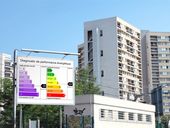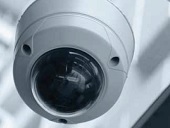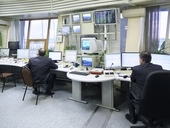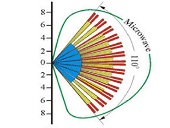
This article aims to analyze false positives in terms of causes and possible solutions to this problem. Following are described equipment and software programs that are suitable to detect, reduce, or eliminate false alarms.
The article describes the characteristics of claims for defects from contract for work according to the new Civil Code. The new Civil Code unifies the provisions on contract for work currently contained in both Civil and Commercial Code. The article describes the defects founding the liability of a contractor, reporting the defects and warranty, the rights resulting from the defects and the specifics of claims for defects when the subject of a contract is a building.
It is important for the work to be clearly specified in the contract. Differences from the contract are considered defects. It is vital to inspect the work after the handover for any differences from the contract. The ordering party has to report the defects to the contractor without undue delay. The statute of limitations for claiming the rights from defects is 2 years. The rights resulting from sales contract defects apply analogously to the contract for work. In case of substantial breach of contract the ordering party can ask for the delivery of a new work, repairs or resolution of a contract. Unsubstantial breach of contract allows for repairs or discount.
The last part of the article concerns specifics of claims for defects when the subject of a contract is a building. The ordering party cannot refuse to accept the building for minor defects. The statute of limitations for reporting hidden defects is 5 years in case of a building. The responsibility for defects in shared between the contractor, the maker of the documentation and the construction supervisor.

Facility management is understood differently In the European Union. The main reasons for the need of standardization in this field of services are different objectives of facility management in the European Union countries, different levels of application and different national cultures, markets and languages. The unified European standard Facility management should help small or larger firms which offer services in this area together, share experiences and traded in international level. Creation of a European standard will be removed barriers to market at the facility management for companies providing facility management services, as well for their customers.

This article describes a photovoltaic generator used for water heating and compares it with the well known solar thermal system. Photovoltaic modules can be connected to the load both directly or via a regulator that tracks the maximal power point of the modules. Measurements and simulations in meteorological conditions of Czech Republic were done to set the energy loss for a system without the regulator. It was found that without the regulator the system can deliver maximally 77 % of energy. To achieve high efficiency of the system, maximal power point tracking has to be used.

The article deals with a new product in the Czech market that is quickly getting to awareness of potential clients and gaining a significant place in the local real-estate market. Until recently, the inspection of immovable properties was an unknown concept. Nevertheless, in recent two years such assistance service is being more and more popular. Pertinent specialised inspection companies assist the real property buyer in eliminating potential risks that are related to selection and purchase of a given building. A competent certified inspector checks up to about 200 items of the building and compiles an expert report to help the client to correctly decide whether he should buy the given building or not. The inspector will acquaint the client with a real purchase price, precisely describe all the defects and how to correct them, and finally, he will hand over to the client a complete budget to cover the cost of necessary repairs.
In 2013 the inspection of real properties comes to one of the fastest growing segments of Czech economy. The people intending to buy any real property are more cautious and, now at the time of an economic uncertainty, they begin using the above relatively new assistance service in a large extent.

Opinions of the professionals concerned on the issue of fire safety in the operation of chimneys, flues and fuel appliances that address the Government Regulation No. 91/2010, are very different. Since this is a very serious issue, TZB-info wants to provide space for professional discussion, which result should be the unification of opinions.
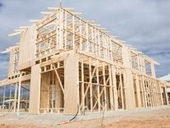
The submitted paper primarily informs about specific fire requirements for wooden houses in the Czech Republic and, due to its total size, it is divided into two parts. The first part is focused on combustibility of building products, i.e. classes of reaction to fire, types of load-bearing and fire separating structural elements (DP1, DP2 and DP3), assessment of construction systems for buildings (incombustible, combustible, mixed) and fire resistance of wooden houses in total. The second part is consequently focused on the issue of space separation of external timber walls with various material arrangements that can noticeably limit location of wooden houses on building sites.

The paper contains basic information on the relationship between the contractor and the client as introduced by the new Civil Code. Firstly, it points to a fundamental difference in the concept of ownership of land and buildings which will not be, unlike the current state, separate. Yet the law allows exceptions to this rule, which are briefly explained in the article.
The main part of the text deals with the issue that is most pressing in construction of buildings. It is the responsibility for the quality of the work or project documentation. The paper deals with the obligation of a client to accept work in stages, addressing liability for latent defects, acceptance of the finished with reservation of latent defects and etc. In this context it should not be overlooked, that the general liable for defective work are together the contractor, subcontractors, maker of the documentation and construction supervisor. These entities may waive liability only if they demonstrate that they did not cause the defect themselves.

Condition survey process, or the process of gathering information and making passports, is one of the basic activities of asset management. In this article focus is on information retrieval and passports, which as an important tool for managing the assets recorded its technical condition and serves as a basis for further planning process, prolonging life and mainly benefit.
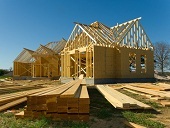
The submitted paper primarily informs about specific fire requirements for wooden houses in the Czech Republic and, due to its total size, it is divided into two parts. The first part is focused on combustibility of building products, i.e. classes of reaction to fire, types of load-bearing and fire separating structural elements (DP1, DP2 and DP3), assessment of construction systems for buildings (incombustible, combustible, mixed) and fire resistance of wooden houses in total. The second part is consequently focused on the issue of space separation of external timber walls with various material arrangements that can noticeably limit location of wooden houses on building sites.
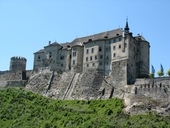
The article describes Castle Czech Šternberk and location NKP Castle Czech Šternberk, current condition of the property, the current state government Castle Providing guides, souvenirs sourcing, arranging catering, rent parts of the castle, SW Support Facility management at the castle, SWOT analysis Castle Czech Šternberk a description of the weaknesses of the castle.

Operation of the building and it installed HVAC is an everyday task of the operator. This article seeks to explain the general situation and the actions that the operation of the building and building arise. The article is devoted attention and dedicated technical facilities, which are subject to special laws governing their operation regulated.
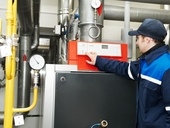
Operational guidelines contain instructions for the behavior of workers in a variety of operational and emergency situations, clarify reporting lines and defines the personal responsibility of individual employees. Operating rules contain instructions for the operating individual units and maintenance instructions.
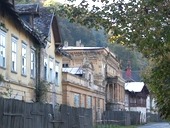
This article describes the pumping subsidy programs in the Czech Republic and EU divided on the subsidy programs of the Czech Republic, Emergency Programme, the preservation of architectural heritage, Program restoration of movable cultural monuments, Fond support restoration of cultural monuments, difficulties come from the EU, historic buildings and their restoration and permanently sustainable development.
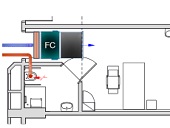
The present study describes the methodology used for the determination of carbon emissions from HVAC systems in order to assess possible options for greener systems. Simple tools were developed and applied for this purpose [1] and a case study was performed on an inpatient ward of an hospital building located in Faro, Portugal, being considered fan coils and chilled beams as terminal units.
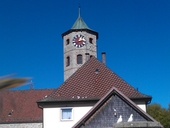
The article describes what a National Heritage Institute, its scope, location of sites and activities. The following are types of divided heritage protection, (cultural monument, national monument, conservation). In conclusion, described the law on state conservation), obligations for owners and likes the cultural monuments.