Can smartphones pose a threat to their users? And how about security camera system? Is it safer to trust hardware from bigger companies? These are the topics of this article.
In the case of building management, innovation is mainly used to improve the quality of the indoor environment and the comfort of people in the bulding. The role of the energy management of buildings is getting to a whole new position, where each measure is considered not only by looking at money and financial savings, but also by performance and above all health of people.
The upcoming CEN Technical Specification (TS) on assessment of existing structures is related to the fundamental concepts and requirements of the current generation of EN Eurocodes. The final draft of the Technical specification was already submitted to the technical committee CEN TC250 in April 2018. The document concerns all types of buildings, bridges and construction works, including geotechnical structures, exposed to all kinds of actions. It contains requirements, general framework of assessment, data updating, structural analysis, different verification methods (partial factors, probabilistic methods, risk assessment), interventions, heritage building. The submitted contribution provides background information on the principles accepted in the final draft of TS and practical examples of applications of existing structures including panel buildings.

Paper deals with the definition of energy flexible building, its impact on the stability of the grid with the planned increasing share of energy from renewable sources and the possibility of using the heat storage capacity of building structures. Paper further analyzes the selected methodology for evaluation of the energy flexibible building and gives an example of thermally activated building structures.
The subject of the paper is the process of introducing BIM into existing buildings. The BIM model is created either during the preparation of a new investment order or it can be implemented in the phase of operation and use. The aim of the paper is to approach this complex and demanding process and to define the important factors influencing its successful implementation.
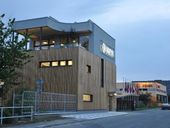
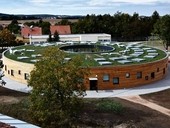
In July 2018, a two-year monitoring of the FENIX Group a.s. in Jeseník. During this time, different battery operating modes were applied to test their capabilities to ensure the power operation of the object. This article describes the entire period in terms of energy flows in the building. The key parameters are energy consumption, supply to the grid, self-sufficiency of the building from the photovoltaic source and its local use. A number of articles have been written about the building, detailing the building and energy aspects [1, 2]. Therefore, the description of the energy economy in the building will be given only to the extent necessary for a general view of the building's energy.
This paper will present a survey of the ladder safety from a firefighter point of view, the analysis of the standard and proposing possible modifications of the standard, analytical analysis of ladder composition by optical emission spectroscopy and X-ray fluorescence spectroscopy and current large-dimensional tests carried out in the Technical Institute of Fire Protection and the objectives we would like to achieve in the research project.
Smart management is an important part of the Smart Cities concept. Facility management applied in the commercial sector is a functioning platform that has already gained its place in the company. It deals not only with property management but also with work with people so that the place in which they work and live should be the place with the best conditions for them. This principle should be applied more so in municipal self-government. Municipal management is also deal with about ensuring these "ideal" conditions, but also about property management. And these processes need to be combined, connected and optimized very handy and efficient. However, there is a lot of activity associated with it, so just as in facility management, it can be helped by quality software support.
Energy consumption in residential buildings depends on the quality of building stock. Besides external conditions, there are two basic factors influencing future energy consumption – the technical requirements for new-built buildings and the refurbishment rate of the existing building stock. The paper presents an approach which integrates both strategies into one dynamic model. The main outputs are the amount of refurbished buildings and the energy consumption in the whole building stock. The model allows to estimate these results according to the quality of new-built buildings and at the same time it is possible to set up a strategy for the second option reducing the energy demand of buildings, i.e. the refurbishment of existing building stock. In the case of refurbishment, the key parameters for the decision about implementation of proposed improvements in buildings are usually the energy prices and the level of subsidy. Decrease in energy prices will change the financial profit from a project and it will consequently influence the owner decision about the refurbishment of a building. The model is based on system dynamics. It allows for a large scope of boundary conditions to be simulated. A sensitivity analysis has been performed on the input parameters having major influence on the owners’ decision about refurbishment of the existing building stock.
The contribution summarizes findings regarding implementation of predictive control algorithms of a hybrid GEOTABS system with time variable price of electric power. The real case study demonstrates that the direct control of the heat pump output according to the dynamic price can bring financial savings. However, for the full utilization of the potential, it is necessary to ensure sufficient accumulation for all types of energy consumption – the TABS system has high storage ability from its nature, yet there arises a problem with accumulation for HVAC and DHW systems.
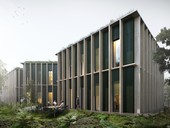
It is expected that the new administrative centre of Lesy České republiky would be an exemplary demonstration of the use of wood, which will be used in the form of the building material or in which the importance of wood will be emphasized in another appropriate way. The paper is focused on a proposal that won the international architectural competition in 2016.